Showing posts with label Noah. Show all posts

Monday, May 10, 2010

Genesis 9 - Covenants and Curses

Let's jump back into it!

Genesis 9

What it literally says - God blesses Noah and his sons, telling them to repopulate the Earth.  All animals will fear Man and can be food for him (except for those that still have their "lifeblood" (4)).

All men and animals will be held accountable, but God will not destroy every living creature again, making the rainbow the mark of his covenant and a reminder of His promise.

Noah plants a vineyard and proceeds to get drunk and pass out, naked.  One of his three sons, Ham, sees his nakedness and goes to tell his brothers, Shem and Japheth.  Shem and Japheth cover up their father.  When Noah wakes up and discovers that Ham did nothing, he curses his child, Canaan, to be a slave to Shem and Japheth.

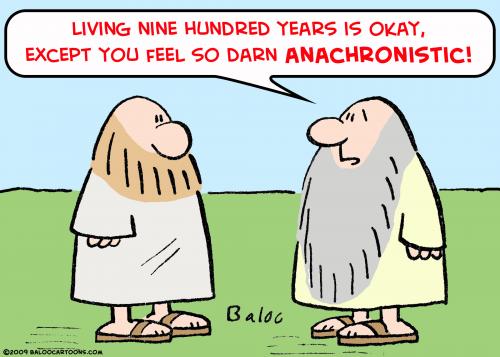
Noah then lived 350 years after the flood, dying at the age of 950.

What it says to me - The rainbow.  Rainbows have a handful of connotations, none of which that come to mind that are masculine.  Maybe decorating my desk at work with rainbow stickers or rainbow designs would cause others to question a lot about me, but visual office themes aside, rainbows are really cool!  Gosh, I haven't seen a rainbow in years; maybe that's Houston for you.  Science floors me.  Outer space is mind-blowing, life at the depths of the sea astounds me, and an intangible display of curved colors in the sky after a rainfall or around a waterfall is an unrivaled beauty of God's creation.  And have you ever seen two rainbows at once?  Even better-er!  I have once, in high school during a baseball game which we ended up winning, making the whole experience that much better ... er!  Rainbows are beautiful.  Why God chose to make a rainbow represent His covenant to never flood the world again I don't know.  But when you see one around water ... it just makes sense.

Did you also notice that Man is allowed to eat meat now?  I wonder if that infers we were vegetarian before the Flood.  Man, a lot changed afterward, didn't it?

So, we have Noah surviving the Flood and being the one human alive God saw fit not to drown.  But God knows none of us are perfect, even the last one.  Noah plants a vineyard and is subsequently the Bible's first recorded drunk.  That's not to say that he was an alcoholic or anything because we don't know that (I'm sure he wasn't because of God'S general distaste for purposeful drunkenness), but on this one occasion the Bible points out that Noah was.  And he was naked, a common side-effect.  How many times have we been on some mountain-top experience with the Lord, only to tumble down the side immediately after?  Another kind of side-effect common in the Word.

FOUND AN AWESOME SITE REENACTING THESE STORIES WITH LEGOS, The Brick Testament

With Noah three sheets to the wind and free in every sense of the word, his sons stumble upon him.  First, though, is poor, unfortunate and the youngest, Ham, unfortunate in name and unfortunate in deed.  What the actual Scriptures leave out, we can guess.  From Noah's reaction later in verse 25 because of what he "found out what his youngest son had done to him" (24), it sounds logical to assume Ham made fun of his father to his brothers.  Perhaps being the youngest he wanted to fit in and be cool or something, but Shem and Japheth were older and wiser and understood about a man's reputation.  The elder brothers covered up Noah, even walking in backwards to behold not their father's failure.  Long story short, Noah disciplines Ham by cursing his child.  *Tugs collar* yeesh.

I read that instead of cursing Ham, Noah had to curse his child because God had blessed Noah and his family, so Noah couldn't possibly switch it all up and step on God's toes.  Here is another example, though, of something bad coming from something good.  Canaan is Ham's son, who is cursed.  Canaan is also "the promised land" the Israelites search for.  Most of the time lands and tribes were named directly after people, right?  I could be wrong, but the land of Canaan might be related to the cursed Canaan, and if so, that's another example of God's grace and love for His creation.

Moral of the story:  Cover up drunk, naked people, especially if it's your parent.

Friday, April 23, 2010

Genesis 8 - Olives, Doves, and Waiting

Genesis 8


What it literally says:  God keeps Noah, his family and the wildlife aboard the ark safe during the flood (1).

When the right amount of time passes, Noah sends out two birds, a raven and a dove, at different times to see if the waters have receded enough (7-12).  Noah sends the dove on three occasions.  The second flight away and back, the dove returns with an olive leaf (11); the third flight sees the dove fly away and not return (12).

God calls all those aboard the ark to come out (15).  Noah builds an altar (20), and when God "smell[s] the pleasing aroma [He says]: 'Never again will I curse the ground because of man, even though every inclination of his heart is evil from childhood.  And never again will I destroy all living creatures, as I have done" (21).

What it says to me:  Noah did a lot of waiting.  A lot.  I don't really mention it in the "literal section" above, but take the following verses into account, if I'm reading them correctly ...
  • First, in 7:24, the flood lasted 150 days.
  • Then, in 8:6, Noah waited another 40 days until he opened a window to let the raven out.
  • Verse 8 sounds like he sent the dove immediately after the raven, but when the dove returned the first time, he waited 7 more days until he sent it out again.
  • In 12, he waited 7 more days after that to release the dove for the third time.
Then you have to factor in the 40 days of rain.  I could be wrong about that, if the 40 days of rain is included in the 150 days that the flood "flooded the earth" (7:24, 8:3).  Total that's 244 days of being in the ark.  That's about 8 months stuck in a smallish, confined wildlife reserve with your family.  Hopefully Noah liked animals and his family!

We have to wait a lot on answers from God, don't we?  At least it seems that way.  He's probably speaking to us in obvious ways for which we're not looking, hoping instead He'll speak to us in the ways in which we want Him.  Does that make sense?  We just have to trust Him when we do hear His voice, that tug in our insides, no matter how crazy He sounds.  He's not.  He has such a better perspective, being able to see throughout Time and such.  There may not be any rain in our lives, but when God tells us to build an ark, it's usually the better choice to start building away.

This section also brings to mind the scientific question, "Is the ark still around today?"  Verse 4 states that "the ark came to rest on the mountains of Ararat."  Ever heard of the Ararat Anomaly?  Check out these web pages, these pictures and video below if you're interested.  Could it be the actual remains of Noah's Ark?


Thursday, April 22, 2010

Genesis 7 - "Rain, rain on my face. Hasn't Stopped Raining For Days."

Genesis 7

The post title is taken from one of Jars of Clay's best songs, "Flood."


Flood – Jars of Clay Music Code

What it literally says:  God tells Noah three more things:  1.) to take seven pairs of clean and unclean animals; 2.) to take seven pairs of every kind of bird; and 3.) that Noah has seven days until the rain starts (2-4).

God said the rain will continue for forty days and forty nights (4), and it did so.  Everything on the earth perished (21-23) as the waters rose and rose far above the mountains (20).  But Noah and his family were safe (13).

The flood waters stayed covering the Earth for 150 days (24).


What it says to me:  We now get to experience the flood and hear of it's devastating consequences.  Two things stood out to me:

The first is Noah's age.  We've already discussed the lengthy mortality rates of our pre-Flood ancestors, but Noah was 600 years young when the Flood happened.  This again makes me wonder about how fit or unfit we were back then at older ages; at what age were people considered "elderly?"

The second is how yesterday's scientific conclusions, to me, were proven in regards to life surviving outside of the ark (and reading the article also addresses the clean/unclean/bird numbers in verses 2 and 3).  Consider these verses:
Every living thing that moved on the earth perished--birds, livestock, wild animals, all the creatures that swarm over the earth, and all mankind.  Everything on dry land that had the breath of life in its nostrils died.  Every living thing on the face of the earth was wiped out; men and animals and the creatures that move along the ground and the birds of the air were wiped from the earth. 21-23 (Emphasis mine)
The Bible (at least my NIV) says pretty clearly which creatures died: those on land!  It makes sense on many, many levels!  I love the mention of "nostrils."  That clearly means air breathing animals, not oxygen separating, gilled sea creatures (plus, it's used in a sentence that begins with "Everything on dry land.").  Also, God never told Noah to make an aquarium in the ark so why would he have to worry about sea life?  The whole planet was going to be an aquarium!  Of course, I'm sure a lot of sea life still died somehow.

Further proof in my eyes that the ark is highly plausible.  And paired with the dramatic fall in average age?  It's pretty hard to deny.

Many thanks go to Arnold C. Mendez!  You rock, man!

Wednesday, April 21, 2010

Genesis 6 - Noah to God: "I'm Building a What Now?"

Genesis 6

What it literally says:  As mankind grew in population, so did wickedness.  God regrets creating humanity, vowing to wipe all of creation off the earth by sending a gigantic flood (7, 17).

However, Noah finds favor in God's eyes (8).  God will let Noah and his immediate family live, but he must build a giant ship, an ark, that will house his family and scores of wildlife.

And Noah did so.

What it says to me:  It's really easy to conceptualize Noah as a pure and honest man who might possibly be skeptical of what God commanded him to do, or at least he might wonder if he heard the Almighty correctly.  I usually think of Noah being in a landlocked area nowhere near water that needed the size of a ship God wanted him to build.  His neighbors wondering what in the world crazy old No-ey is up to.  But then I realize I'm just thinking of Evan Almighty, but that's probably not far from plausible.  The world was beginning to grow comfortable in it's wickedry so I can imagine Noah being made fun of plenty.

And I wonder how God sees us today, how we compare to the world back then.  Today the world feels like it's at its most evil; I'm thankful God made his promise afterward ... but I won't spoil the ending :)

But man, Noah had a task, more daunting than this blog!  Here are the rough estimates of how crazy big the LORD wanted Noah to build this sucker:

450 feet long, 75 feet wide and 45 feet high.

That's a football field and a half long, more than seven stories wide, and more than four stories tall!

Not only is it a massive undertaking to construct this floating oddity, God also wants Noah to take two of all living creatures along with him and his family (19).  I won't make the obvious jokes about it smelling terribly.  A major controversy is this ark's ability to house two of "all living creatures."  Aren't there millions and millions and millions of animals on the Earth?  What about insects and sea creatures?  Well, Arnold C. Mendez, Sr. has another answer for you (see yesterday for his calculation of early biblical ages).  The short answer: "Only air breathing, land dwelling animals would have to be placed aboard the ark," (emphasis mine, and this is further explained in Genesis 7).

When we think about it that way, the size of the ark to house the necessary animals makes more sense!  Mendez also provides these further details about what animals would have lived not in the ark:

The following animals could have survived outside the ark (Whitcomb 1998, p.68):
  • 25,000 species of fish
  • 1,700 tunicates (mane chordates like sea squirts) found throughout the seas
  • 600 echinoderms including star fish and sea urchins
  • 107,000 mollusks such as mussels, clams and oysters
  • 10,000 coelenterates like corals and sea anemones, jelly fish and hydroids
  • 4,000 species of sponges
  • 31,000 protozoan, the microscopic single-celled creatures.
That's a concept I never thought about, surviving animals outside the ark.  This almost sounds contrary to what God says, that He will wipe out everything (13).  If you read his article he goes into more detail, again with mathematical answers that provide a compelling argument.

I wonder what "arks" God wants us to build, things He wants us to do when they either seem unnecessary to us or just outlandish on the surface.  He always has a plan that sees farther that what we can.

I just hope we can be like Noah and simply "do as God [commands]" when He wants us to do something a little on the crazy side (22).

Just how crazy was Noah's task?  Check out the finished product!

Tuesday, April 20, 2010

Genesis 5 - Men of a Certain Age

Genesis 5


What it literally says:  We are given the linage from Adam to Noah (or rather from God to Noah), each son's age at their first born child then at their death.

What it says to me:  At face value, chapter five is pretty straight forward:  Dudes back then were old!  Adam lived to be 930, Seth 912, Jared 962, Methuselah takes the cake at 969, etc.  Plus, these guys were having kids well past their 100s!  But if the ages are to be believed, how in the world did people live so long?  When we ask that question, things tend not to be so straight forward as we first thought.

I did a Google search for "how did people in the Bible live so long?"  With that question the flood gates open up ... literally ... the great flood and Noah's ark play a huge factor in the trend of human age.  Look below:


Age dramatically drops after Noah's ripe old age of 950 (I read ahead, it's in 9:29).  Why?  Well, going back to the search page, several answers are postulated ... nothing that can be proven, of course.  Gleaning from perusing the various web pages, here is what I think sounds the most logical.

The first humans were pretty genetically pure.  Heck, Adam had to have had the most pristine genetic code of all.  Once Adam and Eve hit the curb, well, their punishment became our normality.  Each new child began to affect our gene pool ever so slightly, but unnoticeable because people were still hitting just below 1000.  Vegetation was clean, the air was unpolluted, the earth was in its cleanest, most virginal state.

But then, like always, man is just stupid.

We make God so angry with our living that His only recourse is to flood the planet.  But lucky, holy ole Noah and his family, however are spared, giving humanity a second chance.  Once they start reforming the population again, the average age (illustrated by the individual patriarchs in the graph above; this doesn't necessarily represent the general population as far as I know) plummets over the next few names.  Why?

Life was different after the flood, to say the least.  If the waters covered the entire planet then that would certainly change the physics and chemistry of the world, that is, if God decided not to intervene in the effects.  (It seems He didn't because our old age today is only youth compared to the earliest patriarchs)  So, now we have a huge environmental, physical, chemical, traumatic change to the world that probably affects the sun, UV rays, the flora and fauna, oxygen levels, you name it!  And if Noah's family are the only one's left ... let's just say any defects were kept in the family.

Once again I take my non-scholarly stance and can't prove any of these flat-out guesses.  It sounds logical, though.

Our lives are so configured for our 70-odd years on this earth that I think I'd go nut-so if I had 900 more years to live.  It would make me regret not starting a retirement plan when I graduated from pre-school.

And in case you missed it, the patriarch Enoch (not Cain's first born, but an Enoch on Adam's side) didn't die.  "Enoch walked with God 300 years ... then he was no more, because God took him away" (22, 24).  I wonder how often God did this.  Does He do it still?  Hmm ...

Here are some sources if you're interested in some more Old-Age-Theories:

WHY did people live longer before the Flood than after it? by Arnold C. Mendez, Sr (the above graph is taken from this article.  He has some interesting mathematical reasoning; it's a short read, too)

Canopy Theory at Creationwiki

The Water Vapor Canopy Theory, Why the Bible (And Science) Says It is False, by Rich Deem

Yahoo! Answers question:  Why did people in the Bible live so long? (various answers)